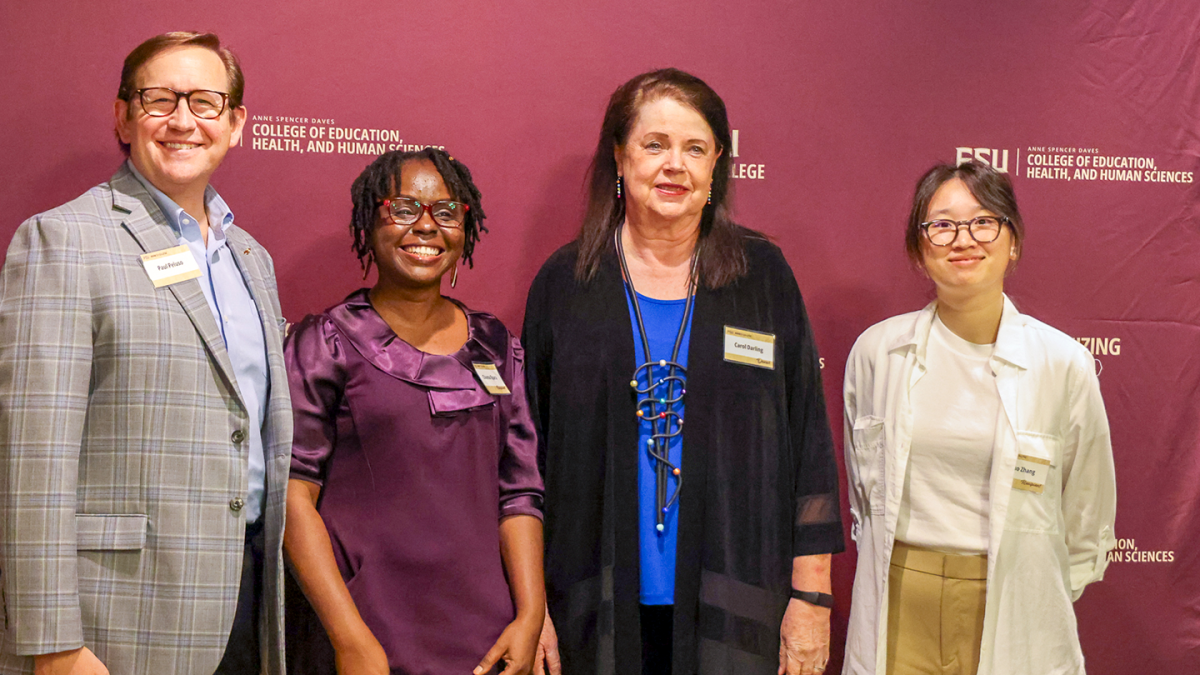
Chioma Opara, a doctoral candidate in the Human Development and Family Science program, draws on her background in home economics education and teaching in Nigeria to study how cultural and psychological factors influence well-being and family dynamics.
Can you share some background on your personal and academic journey and what brought you to FSU?
Growing up in Southeastern Nigeria, my early interest in family sciences was ignited by my passion and empathy towards the welfare of individuals, especially children and the elderly. I derived joy in being close and taking care of children and the aged, even when I had little or no material means to help them. As I grew older, ready to go to college, at first, I wanted to be in a medical line where I could have enough opportunity to care for people; however, due to financial challenges, I decided to defer this interest. I started searching for a course that, although it may not fall in the medical line, must be in line with caring for people. As a result of a thorough search, I discovered the course, “Home Economics”
While studying home economics, I learned about the holistic nature of humans in relation to their physical, biological, social, intellectual, aesthetic, and psychological well-being. I learned to integrate knowledge from various areas to determine the best solution to problems in a given situation. As home economics comprises diverse areas, my studies on these areas provided me with a deeper understanding of how to improve the health of individuals, families, and society at large.
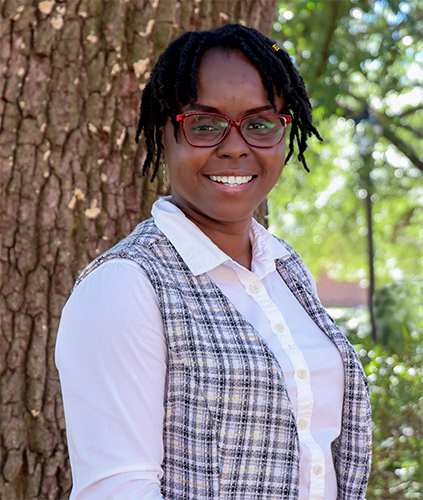 I earned both my bachelor's and master's degrees from the University of Nigeria. Then, I worked as a high school home economics and food/nutrition teacher for five years. I gained useful insights on human growth and education from my teaching experience.
My desire to obtain a Ph.D. is born out of my passion and goal to help individuals and families who face health- and family-related challenges. Taking classes from and working alongside leading scholars in the field was my greatest desire.
What has been the most rewarding part of your time at FSU so far?
Transitioning to a new environment brought its set of challenges, from adjusting to different academic expectations to navigating cultural differences and the sheer distance from home. However, as time went on, I discovered that Florida State University does not only offer an enriching academic environment but also fosters a supportive atmosphere for effective teaching, learning, and research activities. Pursuing my studies at FSU has blessed me with extensive knowledge and abundant opportunities for personal and professional growth. I developed an even stronger enthusiasm for my program through the experiences I gained. The wonderful support I received from the faculty and colleagues truly transformed the Human Development and Family Science Department into a home.
Are you working on any specific projects or research as part of your program?
My research examines the relationships between minority stress, self-compassion, mental well-being, happiness, and academic performance among international students in the United States. This study examines how international students deal with cultural stressors in academics and foreign environments and how self-compassion and cultural models of well-being function as protective factors. Hence, my dissertation highlights the cultural mechanism students adopt to sustain academic success and personal resilience. I am also looking into parental aggravation as a mediator between parental physical and mental health status and mental health in children. Additionally, I am working on the moderating effect of mindfulness on parental stress, aggression, and mental health in both U.S.-born and foreign-born parents.
What advice would you give to someone interested in the Human Development and Family Science program?
Come with genuine curiosity about people, relationships, and social factors that shape family life. Be prepared to think critically about how individuals develop across the lifespan and how families function in diverse cultural, social, and economic contexts. Being an interdisciplinary program and drawing from psychology, sociology, and public health, you must stay open to different perspectives and research methods. Also take advantage of any opportunities for research and community engagements early on so that they will enhance your understanding of how theory applies to real-world family and society at large.
What are your long-term goals after you graduate?
My long-term goal after graduation is to become a professor and researcher. I want to contribute to scholarship and the body of knowledge that promotes family well-being, mental health, and social equity while also mentoring future scholars. I also want to build a career that fosters care and humanity, using research teaching and community engagement to support families and societies.